
Tracing the Silk Road
Written By: Ling Zhong
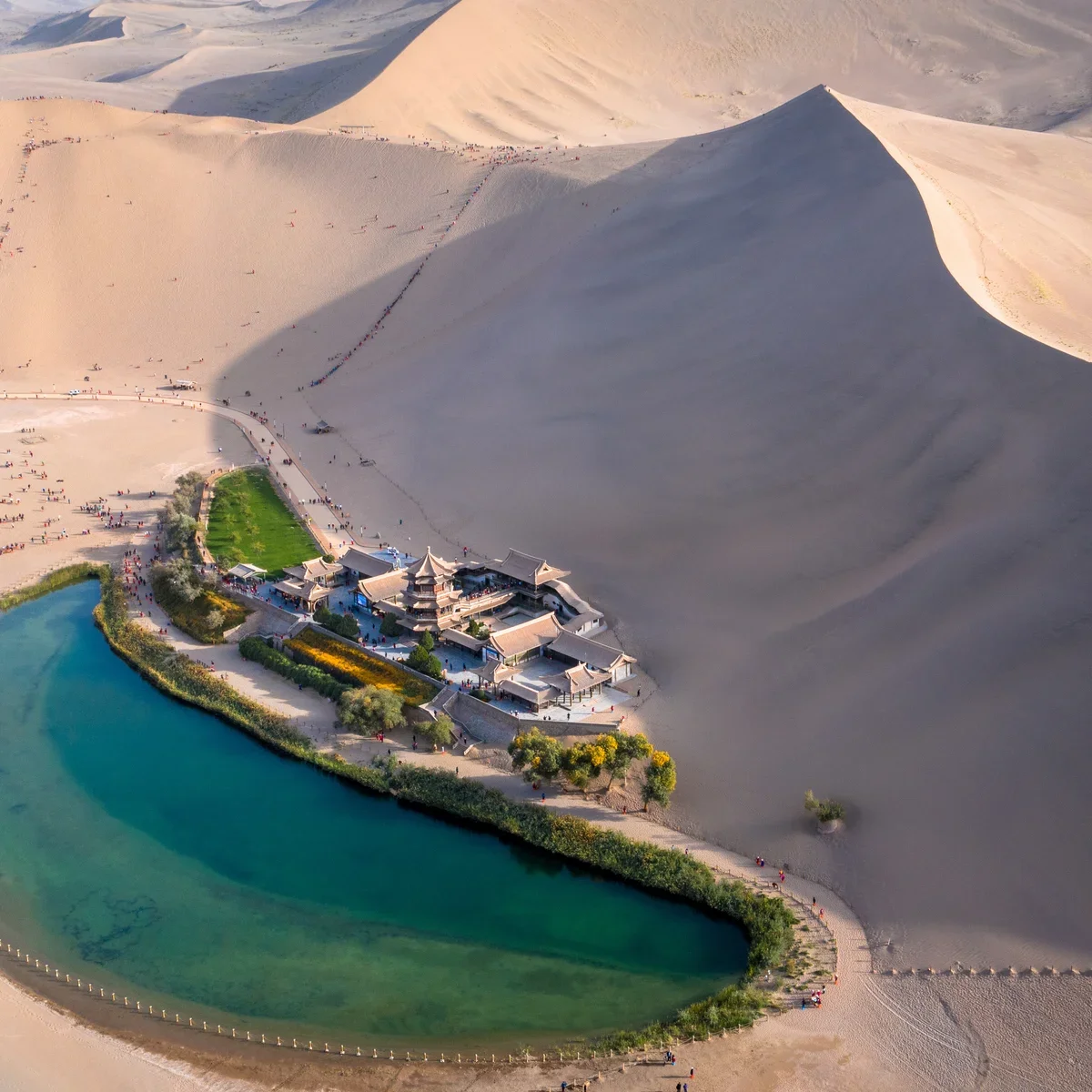
Image from The Guardian
The 21st century is undoubtedly the most interconnected period in history. Advances in communication and transportation technologies allow goods, information, and ideas to move across the globe almost instantly. Yet globalization is not a uniquely modern phenomenon. Networks of exchange, such as the Indian Ocean trade network and trans-Saharan trade route, connected diverse civilizations of the past, facilitating exchange and leaving a profound impact on participating societies. The most famous of these was the Silk Road, a term that describes not only a network of trade routes spanning Eurasia for over two millennia, but also serves as a metaphor for vibrant cultural exchange between civilizations.
The ‘Silk Road’ was a term coined by German geologist Baron Ferdinand von Richthofen in the 19th century. There was no specific name describing the network until then as it is composed of various routes taking root in different states. The Silk Road originated in the 2nd Century BCE in the ancient Chinese dynasty of Han. Emperor Wudi ordered General Zhang Qian to set out to the west, aiming to force diplomatic alliances against the nomadic warriors Xiongnu. Upon his return, Zhang Qian’s reports of Central Asia impressed the emperor, who sent him out again to visit neighboring peoples. Through this, China discovered that there was lucrative demand for its silk, establishing trade routes from China to Central Asia and eventually even beyond.
As the name suggests, silk was indeed the main driving force of the development of this network. The commodity itself was popular among wealthy Romans by the 1st century and became the symbol of wealth and power throughout the network, sometimes even acting as currency itself. While silk and other precious items like porcelain and tea flowed westward, gold and silver moved toward the opposite direction.
Of course, as it became known that the Silk Road housed the exchange of highly valuable commodities, its merchants became attractive targets of bandits and raiders. In addition to those attackers, poor road conditions, extreme weather, deserts, and high mountains made the journey especially dangerous. Thus, merchants often joined together in caravans with pack animals like camels and horses. Caravansaries were also developed as safe inns for merchants to trade, participate in local markets, and rest before embarking into the next stop. Despite the risks and difficulty, merchants and travelers continued to seek goods and ideas from foreign lands, which were in high demand and commanded high prices.
Luxury items weren’t the only things traded in the Silk Road; in fact, the immense volume of knowledge, innovation, ideas, and religion exchanged among the routes were what made the Silk Road so impactful to people back then and people today. Paper and printing techniques spread throughout the Silk Road from China. Gunpowder changed the scale and nature of war. The Black Death also spread along the Silk Road, devastating much of Europe. On a more peaceful note, Buddhism from India came to exert strong influence in the more eastern part of Asia, Hinduism and Islam reached Malaysia and Indonesia, and other religions like Christianity and Zoroastrianism also left their mark.
Sometimes the travelers themselves leave immense impacts. The journey of Xuanzang, a Chinese Buddhist monk who undertook pilgrimage to India in the 600s inspired the enduring tale Journey to the West. Later, Italian explorer Marco Polo and his The Travels of Marco Polo sparked excitement in Europe for lucrative spices and silk, spurring the Age of Discovery. On the basis of all exchange was intercultural interaction; merchants learned a region’s language and customs to negotiate trade successfully. Both the material and cultural aspects complemented each other.
The Silk Road extended over 4000 miles of land, connecting China, Central Asia, the Indian subcontinent, the Arabian Peninsula, Europe, and even parts of North Africa. In the midst of its long history were some ups and downs. The Silk Road flourished during periods of relative peace, such as Pax Romana and Pax Mongolica, but declined when conflict and political tensions disrupted trade. Today’s interconnected world follows a similar pattern. The exchange of goods, ideas, and cultures that we often take for granted depends on international cooperation and stability. As history has shown, peace allows civilizations to learn from one another. The legacy of the Silk Road reminds us that every step toward understanding another culture is also a step toward a more connected world.
