
She was China’s cruelest emperor…allegedly
Written By: Ling Zhong
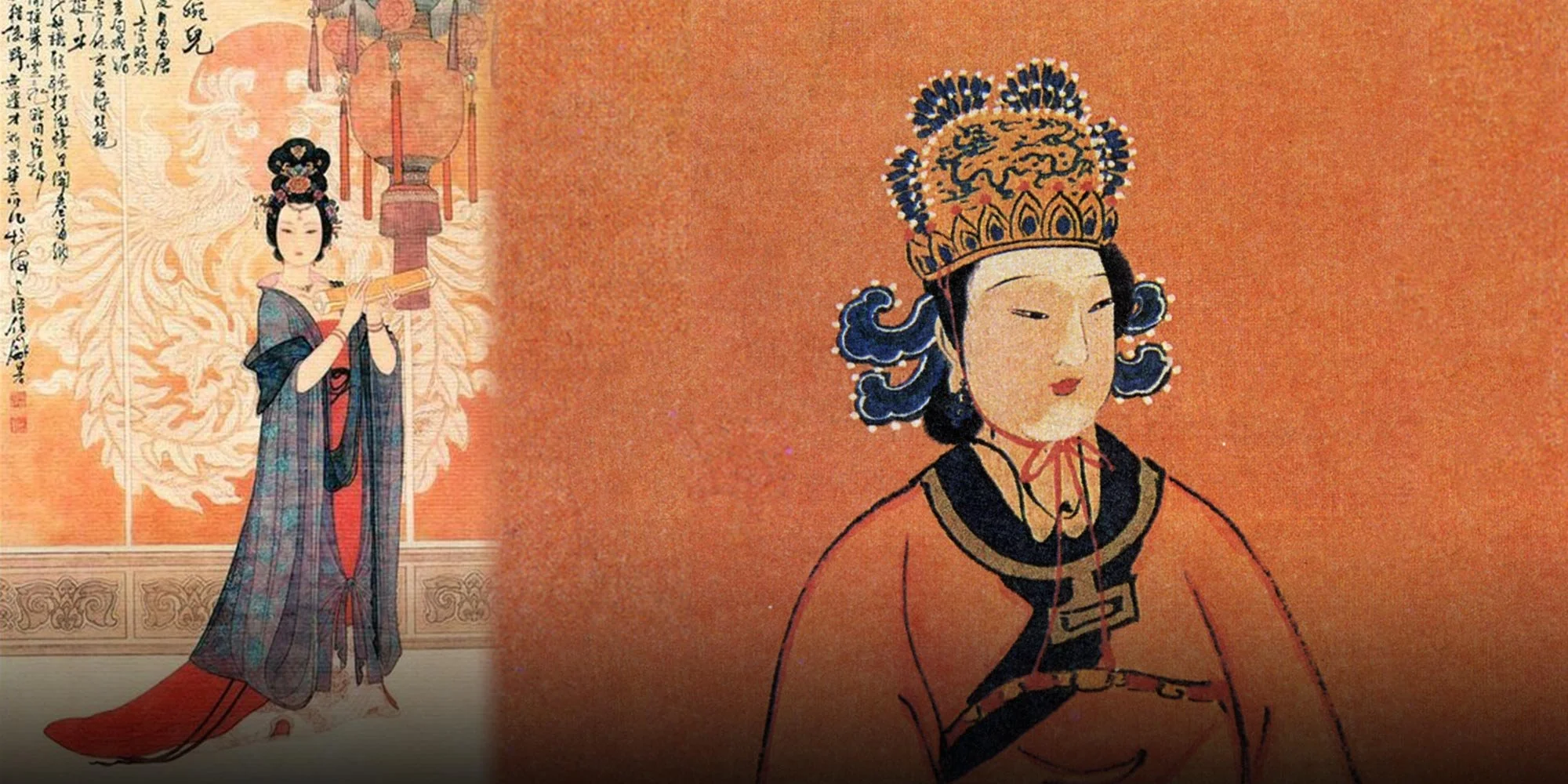
Image from the Sixth Tone
Pharaoh Hathsepsut. Celtic Warrior Queen Boudica. Elizabeth I of England. History has recorded many female rulers who rose to prominence in male-dominated societies. Ancient China also had many powerful female authorities, but only one was able to claim herself as the sole and undisputed emperor of dynastic China.
Later emperor Wu Zetian was born into a wealthy family in c. 624, during the Tang Dynasty. Inspired by her father, a minister in the royal court, Wu believed that she is as capable as any man of rising power. She entered the imperial palace as a concubine at the age of 13. While a concubine to the Emperor Taizong, she became involved in a “taboo liaison” with his son, Prince Li Zhi, until Taizong’s death in c. 649.
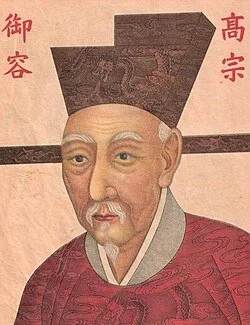
Emperor GaoZhong (image from Wikipedia)
After being sent to and spending years quietly in a Buddhist temple, Wu was brought back to the imperial court by Emperor Gaozhong (Li Zhi after claiming the throne), with the help of Empress Wang, wife of Emperor, who sought allies amid a power struggle against the Emperor’s favorite consort, Xiao. Wu perceived this as the perfect opportunity to act on her ambition, maneuvering her way through the court and eventually removing both Wang and Xiao from the palace.
As she got rid of her two rivals, Wu claimed the status of Empress, ruling China on behalf of Gaozhong, whose weak character and disease susceptibility made him an ineffective ruler. Even as the Old Guard, powerful officials who had served in the court since previous reigns, barred her from gaining formal power, Wu continued to increase her political standing by allying with other ministers.
Wu’s biggest chance arrived with Emperor Gaozhong’s death in 684. After decisively removing her political rivals and opposition, Wu claimed herself as the sole female Emperor mandated by Heaven. Wu’s determination to justify her authority and to pave the way for a new era is evident in her policies.
Wu Zetian toppled the Tang Dynasty and established her own Zhou Dynasty, while claiming herself the incarnation of Maitreya Buddha.
Wu’s Zhou Dynasty was marked by countless reforms that promoted meritocracy, efficiency, and prosperity.
To consolidate her power, she packed her court with talented individuals only loyal to her, replacing opponents and ineffective officials, whose positions were often the result of family connections and wealthy social standing. The advancement of the famous Civil Service Examination, or Keju, was one method of promoting meritocracy. She expanded access to ordinary people, implemented anonymity measures to prevent bribery, and introduced the ‘Palace Examination,’ a system in which emperors administered the test directly. Her policies transformed a court previously dominated by aristocracy to one with more emphasis on bureaucracy, providing more individuals with a chance to improve their standing, regardless of birth status.
Accordingly, a prevalent theme in Wu Zetian’s Zhou Dynasty was improving the status of traditionally disadvantaged people and making politics more accessible to ordinary citizens. Wu established direct communication of lines between herself and the people, which fulfilled two purposes: (1) detecting threats or opposition to her reign by providing benefits to informants, and (2) introducing popular policies that implemented the voice of the people.
Her reforms touched almost all aspects of life in China. Wu improved public education by hiring more teachers and reorganizing teaching methods. Agricultural production reached an all-time high under her reign through distribution of land, the construction of irrigation ditches, and incentives for greater harvest.
Her feats went beyond domestic issues. In terms of the military, Wu led a successful military campaign that took back lands invaded by Göktürks, neighboring nomadic groups. She re-opened the Silk Road, which had previously been closed due to plague and raids by nomads.
However, her power began to decline in c. 697, as Wu grew increasingly paranoid and spent more time with her young lovers. Finally in c. 704, she was forced to abdicate for her son and was expelled from the court to a separate palace, where she lived until her death in 705. This marked the conclusion of the Zhou Dynasty and Wu’s 15 years of undisputed rule.
While modern scholars agree that Wu Zetian’s accomplishments helped lay the foundation for China’s Golden Age, historical accounts from Ancient China tend to suggest otherwise. Ancient historians placed more emphasis on her as a villainess who was “ruthless, conniving, scheming, and bloodthirsty.” Perhaps the most famous story about Wu is as follows: Wu strangled her newborn daughter and accused Empress Wang of the murder, citing the Empress’ jealousy as a motive. Wang was officially removed from the royal family, thus allowing Wu to ascend to the position of Empress. Legend has it that the rivalry between the three women was finally concluded when Wu ordered Wang and Xiao to have their limbs cut off and thrown into a vat of wine to drown.
Historians today have debated whether this account is true or false; afterall, there has been no evidence of such legends besides the writings of later Chinese scholars. It is undeniable that her rise to power was marked by ruthlessness as she exiled her sons and executed countless family members, and sent secret police throughout the country to catch and eliminate anyone suspected of opposing her.
It was fairly common for Chinese emperors to eliminate family members and close associates for power and to provide themselves with countless concubines of various ages. When Wu Zetian claimed the emperor, however, her deeds were deemed scandalous and impermissible. Some historians have asserted that she had “upset the balance of nature by assuming a power which belonged to a man.” The stele by her tomb, promised to be inscribed with her accomplishments, is still left blank.
The only female emperor in dynastic China was an obvious anomaly in the political lineage of male emperors. Her presence has roused resentment and disturbance among the court officials, along with a line of Confucian historians, in patriarchal China. There is–and probably always will be–no way for us to have a completely accurate account of Wu Zetian’s life and reign. What we can do, however, is remember Wu not only for her cruel acts, but also for her accomplishments that brought prosperity and change to ancient China.
