
On Creativity
Written By: Naomi Wu
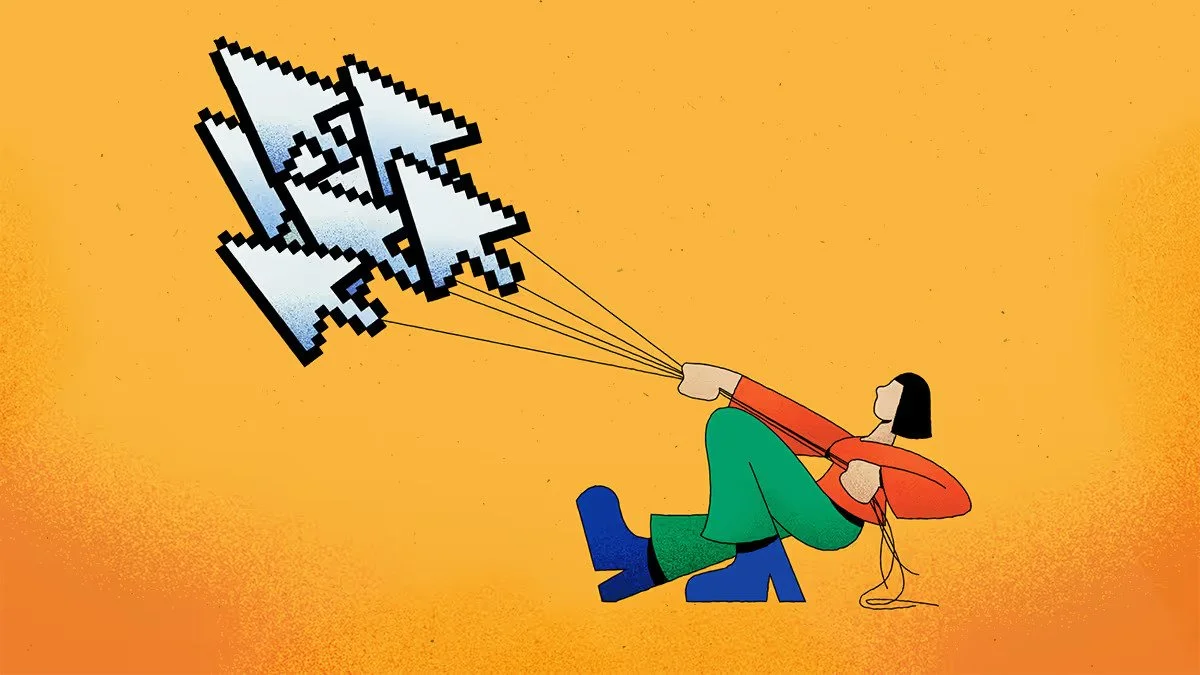
Harvard Business Review / Gabriel Masella
On a border between what is real and what exists solely in the intangible realm, one embraces a unique phenomenon that prevails in the existence of one’s imagination. Whilst dancing on such a borderline, one may fall under the spell of an unexplainable insight. You may experience a sense of knowing something is bound to happen while unable to trace the exact origins of such a premonition, or your intuition, at an unexpected moment in time, may instill in you revelation in which all of the dots connect, and everything suddenly makes sense. When we attempt to discern where such an insight came from, we are oftentimes led to the false belief that our ideas are uniquely ours without the influence of previous ones to guide them, due to the often inexplicable nature of intuition. That being said, oftentimes I am led to wonder, “Am I really creative, or merely an accumulation of other people’s past works?”
To summarize the concept of creativity into nothing more than a few words is to diminish its inherently complex nature. To put it into an analogy, I noticed creativity operates a lot like a water cycle. The resource is knowledge, which you accumulate throughout the course of your life just as plants take up water and use it to grow and synthesize materials. Such materials prevail in the environment passing on from generation to generation. Take writing, for instance; such knowledge exists in the form of language. It is transferred across various mediums, be it oral storytelling, literature, articles, or song lyrics. It changes forms each time, much like organic resources rearrange themselves into various configurations over time; CO2 and water are absorbed through the stomata of leaves, which are then photosynthesized into glucose, and then eaten by consumers. Then, it is converted back into CO2 and H2O, ready to be photosynthesized again. A child is taught language through his / her predecessors. When enough knowledge has accumulated, the person uses their creativity to generate output based on what they learned; it comes out in a different form. The final product is incorporated into the witness’s scope of knowledge; it is then converted into a new form, and then another, and so on. The language prevails throughout, but it emerges in different forms each time, based on the person’s distinctive way of thinking.
The conception of ingenuity is one that undoubtedly has sparked controversy among numerous intellectuals and modern day thinkers. Some argue that intuitions are collections of one's past experiences merged into an insight, and that any thought can be considered original as each one is a result of a different assortment of lived experiences. Others posit that such insight is conceived from one’s unconscious world, from which true independent thought can only originate from. And that brings upon the question of whether thinking of such a question can be considered entirely original in the first place, as it arises in the minds of many inquisitive individuals. While it is true that creativity is a product of imagination that bestows a testament to one’s unique cognitive orientations, one must not fail to acknowledge that one’s creative and inventive thoughts are the byproducts of one’s unique circumstances, each one serving as a catalyst for even more new and original ideas, which vary from person to person. Similar to an intersection consisting of various paths, oftentimes one may come up with ideas similar to those previously invented, but it is unique because the process taken to get there is different.
