
The Inside Scoop to Coca Cola’s Dominating Presence
Written By: Amanda Yan
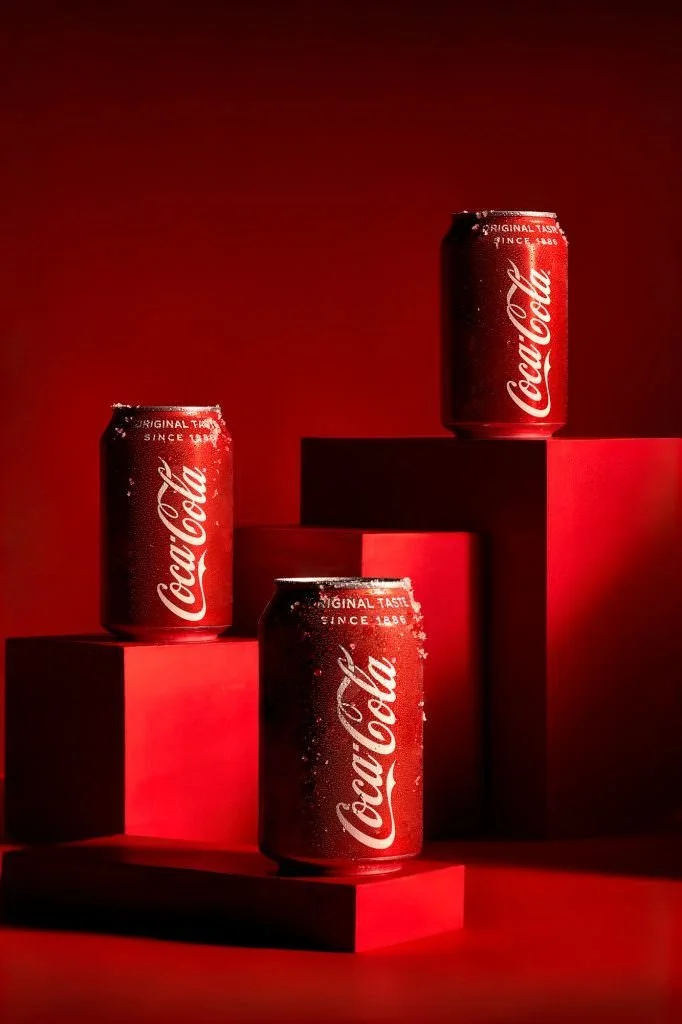
Scott Choucino/Pinterest
Founded in 1886 in Atlanta, Georgia by a pharmacist John Stith Pemberton, the Coca-Cola company became a global beverage giant with over 500 brands in more than 200 countries. The Coca Cola company is known for its iconic Coca-Cola drink and other beverages such as Sprite, Fanta, Dasani, Powerade, and Minute Maid. The Coca Cola Company is constantly innovating and exploring new flavors, designs, and experiences, including through platforms like Coca-Cola Creations and Coke Studio. This ongoing innovation helps it maintain a leading position in the global carbonated drink market. Coca-Cola is also publicly traded on the New York Stock Exchange (NYSE: KO). In addition, Coca Cola operates through a network of independent bottling partners, distributors, wholesalers, and retailers in order to “refresh the world and make a difference.” Despite their success, their goal is to promote sustainability by replenishing water, recycle packaging, and sourcing sustainabile. Today, the Coca-Cola Company and its bottling partners employ more than 700,000 people and is headquartered in Atlanta Georgia.
With the expansion of the Coca Cola company, one of its beverages, Fanta has recently added three fruity twists to its flavor line up. They added Apple Zero Sugar, Raspberry Zero Sugar, and limited edition Tutti Frutti zero sugar to their market. The exciting flavors and taste buds of both new and existing Fanta Fans offer a crisp taste and deliver a tangy, refreshing experience. The tropical twist offers a mix of banana, peach, and pineapple as Fanta expands its line of sugar free drinks with fruity varations. The low calorie flavored carbonates segment had been up 23.1% in value over the last year.This showed that more than 80% of GB consumers are limiting their sugar intake. The commercial development at Coca Cola has found new beverages to get customers to try out their flavors. This not only promotes loyalty brands, but can get more people to explore the product. For instance, the Fanta Zero Apple and Fanta Zero Raspberry will be rolling into stores from February 24th in 330ml cans and 500ml rPET bottles for shoppers to enjoy on-the-go, and larger 2L rPET bottles and multipacks for sharing occasions at home.
In the Coca Cola industry, there are lots of management roles to make sure the business runs smoothly. James Quincy has been the chairman and chief executive officer since 2017 that has various leadership roles globally. The executive vice president and chief operating officer is Henrique Braun in which he is responsible for the company’s financial strategies. In addition to finance, the president and chief financial officer is John Murphy who oversees the company’s financial strategies. Braun and Murphy work together to make sure Coca Cola’s financial strategies are accurate and precise. The senior vice president, treasure, and head of corporate finance, Stacy Apter manages the corporate financial operations. This means Apter is in charge to make sure Braun and Murphy’s work are giving accurate results or giving out false information of the Coca Cola industry. The executive vice president and global chief marketing officer, Manuel Arroyo is responsible for leading the world wide marketing initiatives which includes promoting its beverage to the public.
The chairman and chief executive officer Qunicy began his career at Bain & Co before joining the Coca Cola in 1996. He had leadership positions in Latin America and Mexico where he led the Jugos del Valle. In 2015, he became the president in the Coca Cola industry and later the CEO in 2017. In the Coca Cola Industry, Quincey advocates for a risk tolerant culture in which he has diversified Coca Cola's portfolio by investing in new products and start ups. His leadership style focuses on adapting Coca Cola products to the modern market trends and sustainability. Quincy had redirected the company’s efforts towards becoming a total beverage company in which he moved beyond the company’s historical soda dominance. He discontinued around 200 underperforming bands which is approximately 50% of Coca Cola’s entire portfolio at that time. In Qunicey’s perspective, driving an accelerated volume growth with indifferent product offerings would have more benefits and high rewards. Additionally, Quincey has added on Coca Cola’s sterling history of social responsibility and community engagement while extending the company’s impact to new fields. In 2023, 148% of the water used in Coca Cola’s finished beverages is returned to nature and communities. In 2022, Coca Cola donated 1.4% of its operating to its philanthropic arm. Recently, in 2024, Quincey’s action and leadership skill has allowed himself to receive the Yale Legend in Leadership Award, highlighting his esteemed position in the business community.
Coca Cola operates as a large decentralized organization in over 200 countries. Operations are segmented into regions such as North America, Latin America, Europe, Africa, and Asia-Pacific each with dedicated management teams. Coca Cola wants to make sure that they have a diversified portfolio of over 500 brands which includes Coca Cola, Sprite, Fanta, Dasani, Powerade, and Minute Maid to prevent significant loss in their product investment. Coca Cola collaborates with independent bottling partners, distributors, wholesalers, and retailers to manufacture and distribute its products globally. With its mission to "refresh the world and make a difference,” its values are leadership, collaboration, integrity, accountability, passion, diversity, and quality. The company engages in public service and philanthropic efforts, which includes support of education, health, and community development projects worldwide. However, Coca Cola has faced several ethical challenges such as environmental concerns as the company has been criticized for plastic pollution, producing over 3 million tonnes of plastic packaging annually. In 2024, it was accused of abandoning its goal to have 25T5 of its packaging reusable by 2030. In addition, the company has faced lawsuits alleging misleading marketing practices related to the health risks of sugary beverages. Despite the environmental concerns and health concerns, the Coca Cola company is a global leader in the non-alcoholic beverage industry with an organized structure and an exceptional leadership skill.
Coca Cola was invented in 1886 by a pharmacist John Pemberton who initially sold the drink as a medical drink. He created the syrup of Coca Cola and sold it as a “patent medicine” at Jacobs' Pharmacy for five cents per glass. In 1888, Asa Candler bought the formula to make the drink for $2,300. It soon gained popularity as it was sold later to Asa Girggs Candler who incorporated the Coca Cola company in 1892. A year later, the trademark Coca Cola was registered in the US patent office. In 1899, the Coca Cola company signed its first agreement with an independent bottling company which marked the beginning of the Coca Cola bottling system. In 1985, after the iconic Coca Cola contour was designed, the New Coke with a reformulated version since the old version was declining in sales. Changing the formula, following market trends, and creating new flavors was what kept the Coca Cola business running. Like the first formula of the Coca Cola, it first gained in popularity but started to decrease in sales as consumers believed that the original flavor became outdated. So, in 1992, Coke II was rebranded before being discontinued in 2022. Today, the Coca Cola company is a multinational corporation with a global presence known for its wide range beverage products. Recently, the company has launched Coca-Cola Orange Cream, blending cola with nostalgic flavors of orange and vanilla, appealing to consumers seeking novel taste. These initiatives demonstrate Coca-Cola's commitment to adapting to market trends and consumer demands, ensuring its products remain relevant in a competitive landscape.
Coca Cola’s key products would include carbonated soft drinks such as Coca Cola Classic, Diet, Coke, Coca Cola Zero Sugar, Sprite, and Fanta. Not only does Coca Cola sell its non alcoholic carbonated drink, but also they sell sport drinks and water such as Powerade and Dasni. These wide range of beverage options have varied from customers taste and preferneces. These famous non alcoholic beverages have been sold to many parts of the world and many consumers. Coca Cola has been the world’s most recognized and iconic brand. It has an extensive distribution network to over 200 countries to ensure product availability across the diverse markets. Since the non alcoholic soft drink is competitive, Coca Cola has some competitors which include PepsiCo, Nestle, and Keurig Dr. Pepper. Coca Cola’s main rival is PepsiCo as it sells similar carbonated beverages but has a significant line of snacks in the food industry. Both companies have their own aggressive marketing strategies such as celebrity endorsements, social media campaigns, and iconic imagery to build brain loyalty while differentiating themselves from the competition.The rivalry dates back in the late 19th century when both companies emerged in the soft drink industry. Coca Cola was established in 1886 and Pepsi Cola was established in 1893. The competition was known as the “Cola War” campaign in which the rivalry has led to a memorable marketing campaign when the Pepsi Challenge and Coca Cola’s New Coke fiasco had fueled the competition.
Coca-Cola’s income statement for 2024 reported net operating revenue of $47.8 billion, reflecting a 3% increase from the previous year. The company achieved a gross profit of $28.7 billion, up from $27.2 billion in 2023. Interest income rose by 9%, reaching $988 million, compared to $907 million in 2023. Meanwhile, interest expenses increased by 8%, totaling $1.66 billion, up from $1.53 billion the previous year. Equity income was $1.77 billion, a 5% increase from $1.69 billion in 2023. Other income surged to $1.99 billion, representing a 249% increase from $570 million the year before.The company reported operating income of $11.3 billion, reflecting effective cost management and operational efficiency. Net income reached $10.6 billion, indicating stable profitability. Overall, the growth in net revenues and operating income underscores Coca-Cola's ability to navigate market challenges while maintaining strong consumer demand.
Coca Cola’s cash flow statement in 2024 had operating activities that generated $100.5 billion which went up from $97.7 billion in 2023 which shows an asset growth. The total liabilities is $74.2 billion which has increased from $70.2 billion in 2023 which can be attributed to a rise in obligations. The shareholders equity is $26.4 billion which increased from $24.1 billion 2023 which can indicate an enhanced investor value. The increase in both assets and liabilities shows expansion activities while the growth in shareholders’ equity strengthens the financial foundation. The operating activities which had generated around $10.6 billion shows a robust cash generation from core operations. The investing activities that Coca Cola has utilized cash for strategic investments which includes acquisition and capital expenditures. Some financial activities would include allocating funds towards dividend payments and share repurchases, which shows the shareholders’ returns. A healthy cash flow from operations has allowed Coca Cola to invest in growth opportunities and maintain consistent shareholder distributions.
In 2024, Coca Cola’s stock had shown resilience in the market fluctuations. The company has continued its tradition of dividend increase, which shows its 62nd consecutive year of dividend growth. The stock’s beta is approximately 0.6 which indicates that it is less volatile than the overall market. In terms of dividends, Coca has a strong history of providing shareholder returns. As of March 25 2025, the trailing twelve-month dividend payout is $1.94 resulting in a dividend yield of 2.65%. The company has consistently increased its dividend over the past 64 years which reflects its commitment to return value to shareholders.The analyst sentiment towards Coca Cola remains positive. The outlook on Coca Cola’s stock has maintained analysts with the average target price of $75.94. This is a consensus rating of “overweight” reflecting confidence in the company’s growth prospects and financial stability.
Some capital allocation updates would be that the Coca Cola company will continue to invest in its various lines of business and have spent $2.1 billion on capital expenditures in 2024, an increase of 11% versus the prior year. The company has continued paying its dividends totaling $8.4 billion during 2024. The company has increased its dividend in each of the last 62 years. Coca Cola did not make any significant acquisitions, so the company will continue to evaluate inorganic growth opportunities through brands and capabilities. So far, with the respect to divestitures, the company will make progress towards refranchising company-owned bottling operations. The company had issued $0.7 billion of shares in connection with the exercise of stock options by employees and purchased $1.8 billion of shares. The net share repurchases were $1.1 billion. The company’s remaining share repurchase authorization is approximately $4.9 billion.
In the first quarter of 2025, the comparable net revenues are expected to include 3% to 4% currency headwind based on the current rates which includes the impact of hedged positions with an addition of 2% to 3% headwind from acquisitions, divestitures, and structural changes.
Specific financial figures for Pepsi Co’s 2024 performance are reported higher revenues compared to Coca Cola, which shows its diversified product portfolio which includes snacks and beverages. This diversification allows Pepsi to enable a border share of consumer spending across different market segments. Coca Cola, however, has a stronger profitability margin which reflects efficient cost management and a focused beverage strategy. Coca Cola’s gross margin is typically higher than PepsiCo which shows an efficient cost control, global bottle partnerships, and scalability which can optimize production and distribution. Therefore, Coca Cola focuses on profitability and global leadership while Pepsi focuses on diversification and revenue growth.
The Coca Cola Company plays a significant role in both the global economy and the beverage industry as it operates in over 200 countries and contributes to global employment and economic activity. Its supply chain supports millions of jobs worldwide ranging from manufacturing to distribution and retail. The company operates through local economics through partnerships with suppliers, distributors, and retailers. Coca Cola’s innovation approach would be introducing new products and flavors to meet the consumer’s criteria. Recent innovation include the launch of prebiotic sodas under the Simply brand which targets consumers who are wanting an healthy alternative. Coca Cola operates through both Business to Business and Business to Consumer models. For instance, its beverage concentrates and syrups to bottling partners is a business to business. In a business to consumer relationship, they sell directly to consumers.
Coca Cola’s supply chain is a complex network as it involves manufactures, bottle partner’s distributors, and retailers. Manufacturers in the Coca Cola company are responsible for producing the beverage concentrates and syrups. The Bottle partners are responsible for purchasing concentrates, adding other ingredients, and packaging the beverages. The distributors and retailers are responsible for distributing finished products to various retail outlets, supermarkets, convenience stores, and vending machines. This system will allow Coca Cola to maintain their global presence and to adapt to local market conditions. With the proper system and order, Coca Cola will be able to establish a stable market.
Coca Cola’s intellectual property portfolio includes trade marks, patents, and copyrights to ensure that no one is stealing their beverage formulation. The Coca Cola script logo has brand names like “Coca Cola”, “Diet Coke”, or “Coke Zero” which are distinctive bottle designs. The patents inside the Coca Cola company are innovations in the recipe for the beverage, packaging, and manufacturing processes. The copyrights are the marketing materials, advertisements, and promotional content. These properties are there to protect the company’s brand identity and market position.
Coca Cola also has some regulatory and compliance considerations such as the food and beverage regulations, environmental laws, and international trade law. These regulatory and compliance considerations are important for Coca Cola as they have to navigate various regulatory requirements. In the food and beverage regulations, compliance with the health and safety standards for product’s ingredients, labeling and advertising is important because mislabeling can put the consumer’s health in danger. Mistakenly putting an ingredient can also cause danger as it can possibly cause a consumer to be allergic to one of the ingredients. In the environmental laws, regulations would have to follow regulations regarding packaging waste, water usage, and carbon emissions. Some of Coca Cola’s packaging can contain lots of plastic, and if not recycled properly it can cause damage to the environment. The international trade law is to manage tariffs and make trade agreements which can affect its global operations. There are some import/export restrictions in the international trade law meaning the global network of bottlers and suppliers have a Code of Business Conduct and Anti-Bribery policy that all employees are prohibited to discriminate or harass all aspects of their business. They have a policy to respect human rights in their own business and supply chain. The Coca Cola company balances innovation and follows regulatory landscapes.
At the Coca Cola Company, one intriguing position is current availability in San Diego California would be the regional sales trainer role. In this role, I am responsible for developing and implementing sales training programs tailored to regional needs. It is my job to collaborate with sales teams to identify skill gaps and provide targeted coaching. I have to monitor and evaluate the effectiveness of training initiatives and to adjust strategies as needed. It is important I stay updated with the industry trends to ensure training content that remains relevant and impactful. My salary ranges from $88,069 to 110,086 USD per year. Some benefits in this job would include medical, dental, vision, paid time off, and education reimbursement. This role would enhance my capabilities in the sales force which can directly impact the company's revenue and market presence. This can offer me an opportunity to work in a dynamic environment allowing me to foster professional growth and development. With the company’s global stature and commitment to employee development, this position can be challenging and rewarding. I feel like I would appreciate the strong brand legacy and the sense of belonging to a globally recognized company. The Coca Company offers subsistence opportunities and benefits, and therefore I feel like this position would fit me.
The Coca Cola Company appears to be a high quality organization with many attractive qualities. In the future, I would like to work for Coca Cola since Coca Cola is a globally recognized brand with a strong market presence in over 200 countries. They maintained consistent financial perofrmances, stable rock returns, and decades of uninterrupted dividend growth. Working at this company can offer a sense of job security and prestige. Additionally, Coca Cola is still expanding its product lines to meet consumer’s demands such as zero sugar options, prebiotic sodas, and even alcoholic beverages. The company has embraced experiential marketing through platforms like Coke Studio and Coca Cola creations. These initiatives have shown a willingness to evolve and innovate which is what makes Coca Cola a changing industry. With a global footprint and a large employee base, Coca Cola offers ample career advancement and learning opportunities like marketing, logistics, sales, and operations. Positions like Regional Sales Trainer and Global Marketing Analyst have shown that Coca Cola invests in professional development.
