
Maya Hawke’s “Thérèse”
Written By: Angel Lu
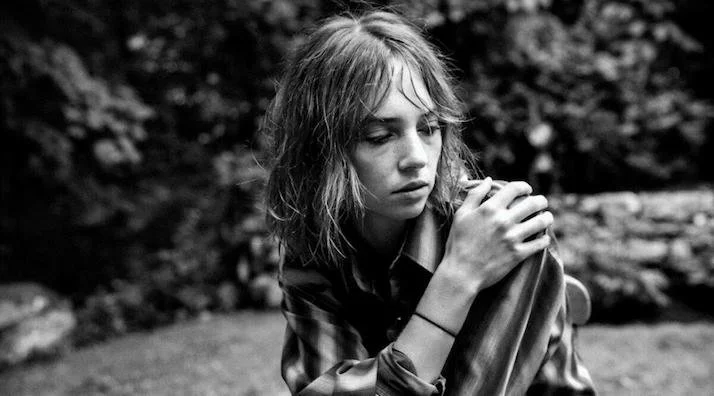
Celine Sutter/Onestowatch
In 1938, Balthasar Klossowski (Balthus), a French modern artist, painted one of his many controversial art pieces, Thérèse dreaming. It depicts his subject Thérèse Blanchard, a pubescent girl, lost in thought, painted with her underwear showing. In Balthus’ artworks, the theme of voyeurism of young girls is repetitive, and despite the overwhelming infamy he received, Thérèse dreaming stays up at The Metropolitan Museum of Art.
It’s a debate whether to take down the painting or not. Some project feelings of disgust, arguing how immoral it would be to have a painting of the young girl showing her underwear up at The Met. Others believe art should not be censored just because of its inappropriate nature. Ultimately, after a failed petition of around 10,000 signers, the painting remains up for the world to see.
In response to Thérèse dreaming, actress and singer-songwriter Maya Hawke released the song “Thérèse” on her album Moss in 2022. The lyrics of the song reflect Maya Hawke’s personal experience with Thérèse dreaming and how Thérèse does not innately belong to any of the viewers.
The verses of “Thérèse” explain the thoughts of multiple perspectives–both Maya’s and another viewer’s with conflicting views. The first three lines of the song begin as an observation from Maya herself: “I go see Thérèse dreaming / She's stretching out her sore shoulder / Leaning back, eyes closed, reaching up” (Hawke, lines 1-3). Upon seeing the painting, Hawke does not emphasize the suggestiveness of the painting, nor see Thérèse in an explicit way. The second verse, however, shows the perspective of someone who sees “Thérèse” as an inappropriate display: "Obscene, it really says it all / . . . / And get her down, takе her off the wall" (Hawke, lines 14-16). With a play of irony, Hawke comments how many view Thérèse dreaming as simply “obscene” and nothing else, and how those viewers criticize the painting as improper but view it through a voyeuristic lens themselves.
In the first and second verse of the song, Hawke discusses the interpretations of the painting, such as what Thérèse may be dreaming of:
"She's wishin' she was older / Dreamin' of an Appaloosa / Saddled up, ridin' out of town / Dreamin' of a Shelby cobra / Diggin' her tires in the ground / . . . / She dreams of Marlon in Austin / Their bodies tangled in a net / She thinks of him every so often / When she feels like a space cadet" (Hawke, lines 4-20).
These “dreams” are played off as the viewer’s idea of the painting. Though none of this is explicitly mentioned in the painting itself, the audience is free to have several interpretations, as art is interpretive and no viewpoint is inherently wrong. In a way, these dreams of horses and boys Hawke suggests liberates Thérèse from being viewed sexually, as it reaches beyond the typical controversial interpretations that have been connected to the painting for years. However, even within these views lie the voyeuristic perspective, as it ultimately passes as a valid interpretation.
The pre-choruses Hawke writes are significant to the song, addressing the topic of the Thérèse controversy. To respond to the worries of the painting, the first pre-chorus writes, “She empathizes with your feelings / She’s more interested in ceilings” (Hawke, lines 21-22). Hawke writes that Thérèse is aware of people viewing her sexually, stressing how it’s understandable why the painting would be petitioned to be taken down. In a new light, prioritizing the ceilings over the uncomfortable feelings reveals that there is much more to the painting than its topic of controversy. Fundamentally, the second pre-chorus expresses the main message of the song: "Thérèse does not belong to you / The horses, cars, and cowboys do" (Hawke, lines 35-36). The “horses, cars, and cowboys” directly reference the exemplified perspectives Hawke talked about in the first and second verse. She explains how those viewpoints serve as a message from the viewer, whether it be negative or positive, but will never be permanently tied to the painting itself. Thérèse is free from whatever perspective she’s seen from; she’s not obligated to be removed just because one’s interpretation of her is suggestive. These lines support the following chorus, “It’s tactless, it’s a test / It’s just Thérèse, it’s just Thérèse” (Hawke, lines 11-12). The viewers may see the painting as “tactless,” immoral and unfortunate, as they impose layers and layers of critical narratives onto the subject. But “it’s just Thérèse” reclaims Thérèse’s identity in and of itself. It states that Thérèse shouldn’t be confined to the judgement that tried to label her.
In regards to Maya Hawke’s personal experience and seeing the painting in her childhood, she writes in the third verse of her song:
“She reminds me of memories / Sleeping off the growing pains / We were sea anemones / Spelling out each other's names / Whispering inside our red house / While the adults were a-sleeping I guess / Thérèse was just for me / A quiet I keep on keeping” (Hawke, lines 27-34).
Hawke refers to Thérèse as a close friend, expressing comfort in confiding in each other. Though Thérèse is not physically present, the similarities between Thérèse and Maya makes it easy to understand what she could’ve felt. Both being young girls, they wish to shake away from the cultural and social expectations of adults, and try to find identity within each other. The experience is inevitably flooded with society trying to protect them by emphasizing their vulnerability, while the young girls themselves are unselfconscious and do not see themselves sexually.
Ultimately, Maya Hawke’s “Thérèse” reminds viewers that Thérèse dreaming and other artworks are interpretive, and Thérèse does not deserve to be censored because one’s view of her is sociogenically vulgar. The feedback on Thérèse dreaming inspires thought on how society has shaped perspective on art.
Listen to Thérèse by Maya Hawke on Spotify:
https://open.spotify.com/track/2Tw3pnEzH3UeChCNGIQk9l?si=gsiyksLdSRKGnDHNPnj_Rw
