
Chronic Diseases Part 1: Diabetes
Written By: Alaina Yan
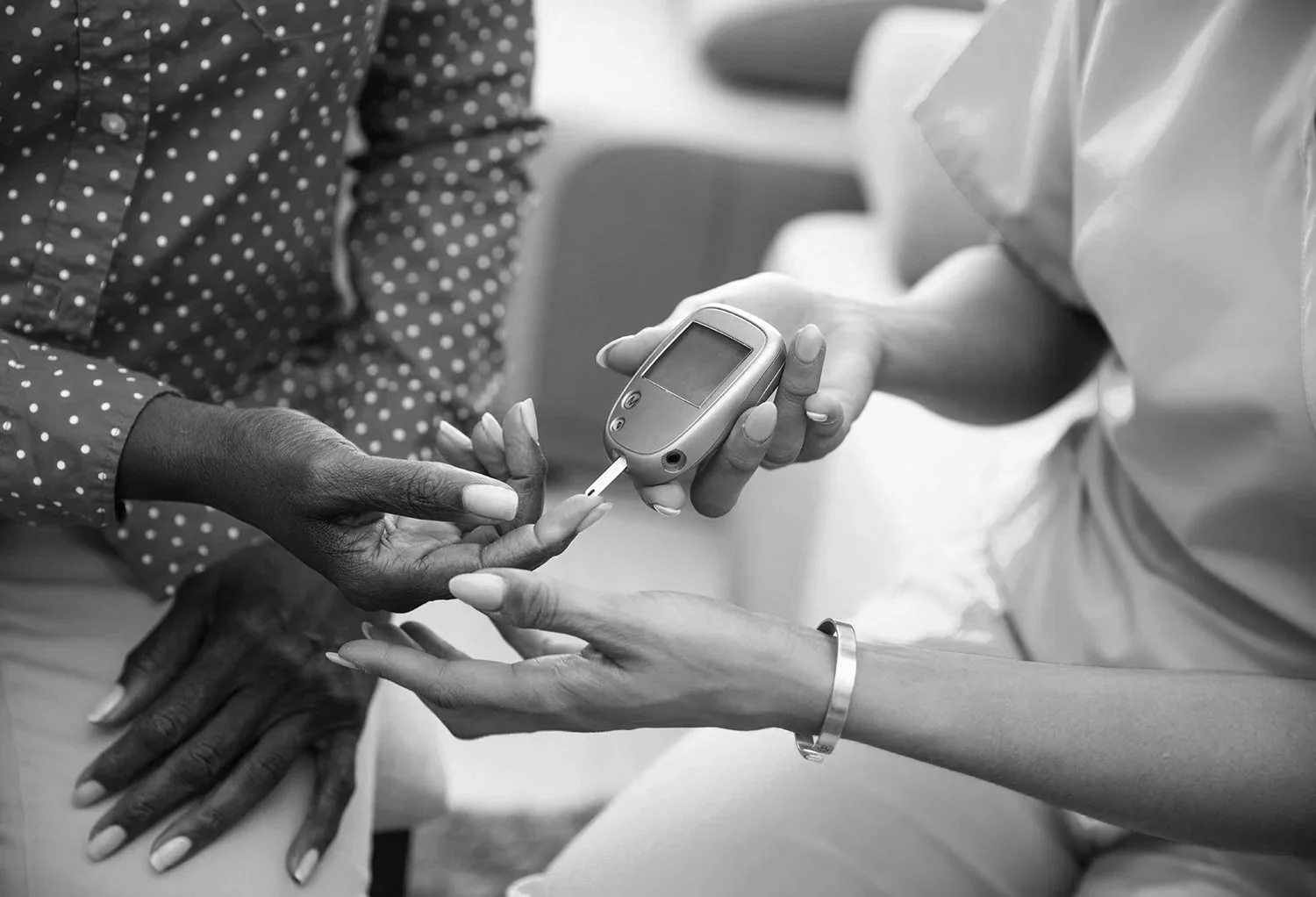
Image form Chenmed
What is Diabetes?
Diabetes is a condition where a person’s blood sugar is too high. People of all ages are affected, some being diagnosed in their late 20s, and others being diagnosed when they are a child. Diabetes stems from the pancreas’s inability to regulate insulin levels, the hormones that allow the body to use glucose to make energy. While the majority of diabetes cases are life-long and chronic, type 2 diabetes could go back to “remission.”
Type 1 diabetes (T1D) is an autoimmune disease where the immune system attacks the insulin-producing cells in the pancreas. Thus, sugar builds up in the blood and triggers hyperglycemia (high blood sugar). Usually, children are the main suspects of T1D, but adults can also develop the condition later on in their life. Common symptoms include excessive thirst, fatigue, unexplained weight loss, blurred vision, slow-healing cuts, vaginal yeast infections, excessive hunger, and frequent urination.
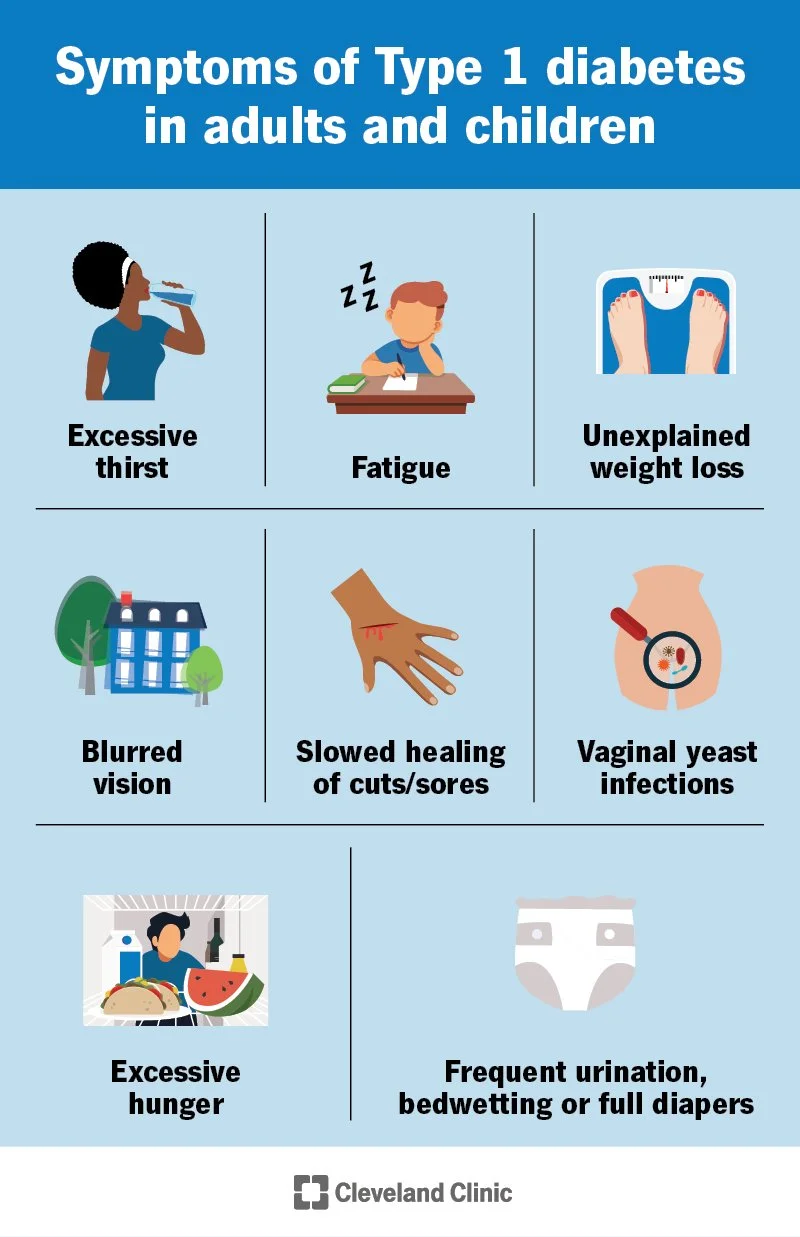
List of Common Symptoms Infographic from Cleveland Clinic
Type 2 diabetes (T2D) is when the body cannot effectively use insulin or doesn’t make enough of it, also leading to hyperglycemia. When people have blood sugar levels of 126 mg/dL or higher, they are diagnosed with T2D (the healthy sugar levels are 70-99mg/dL. T2D is common in the US with 10% of people in the US having T2D. Common symptoms also include increased thirst, fatigue, and unexplained weight loss, but now include tingling or numbness in the hands or feet and dry skin.
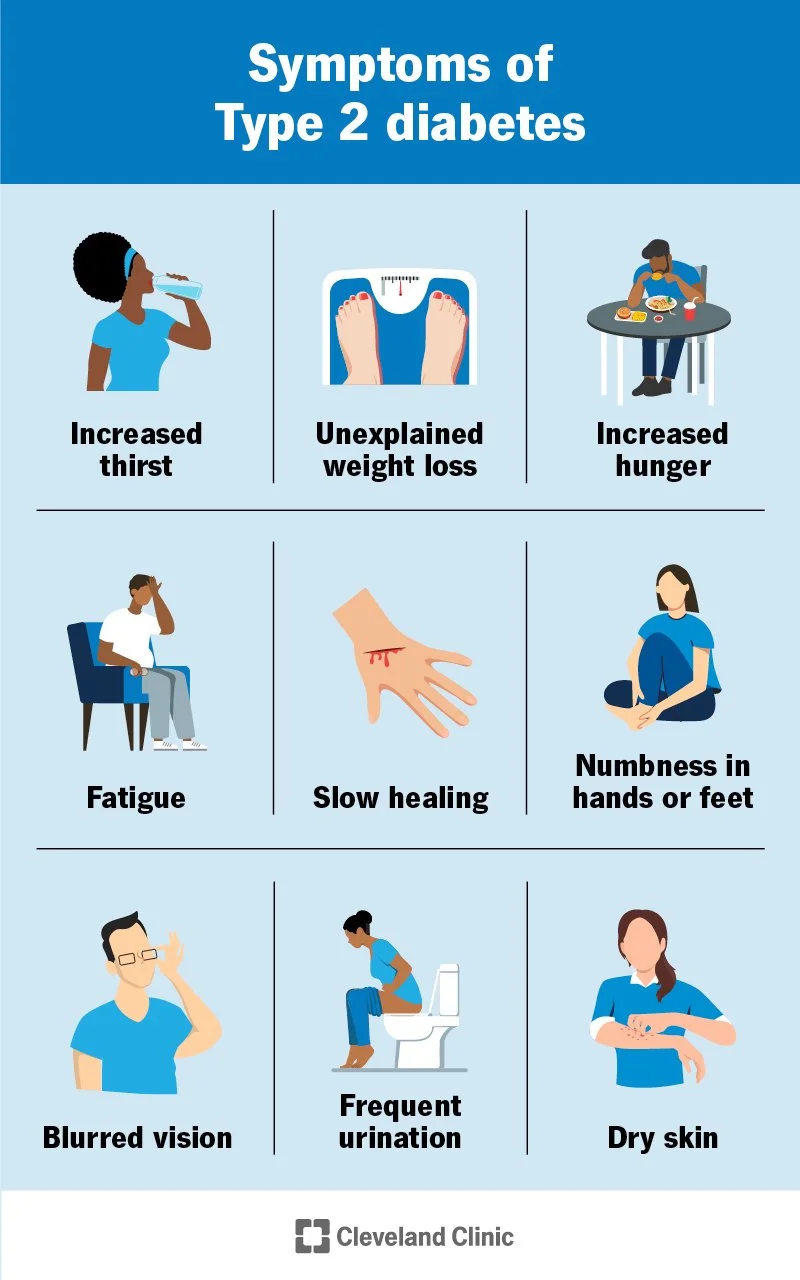
Common T2D Symptoms Infographic from Cleveland Clinic
When they are diagnosed, many people are shocked and scared. This is not surprising; the idea that life will never be the same again is terrifying. In a Mayo Clinic Connect message thread, many online users discuss their struggles with adapting to their diabetes, some stating that they “miss [their] old life before diabetes…” and their “friends don’t understand what it’s even like.” In fact, people with diabetes are two to three times more likely to be diagnosed with depression. Thus, diabetes, while having major physical impacts, also has many mental impacts.
While technology is extremely advanced today and management is much more straightforward, many people still long for their old life back, regretting how they did not take better care of their bodies when they were younger.
Much of diabetes is genetic; people inherit the risk and predisposition from their parents or relatives, and their lifestyle choices and diet trigger the development. While you may be at risk, there are many steps to decrease your chances of developing diabetes, whether it be type 1 or type 2.
Ways to Prevent Diabetes
Lose Weight. Being obese and overweight increases people’s chances of developing diabetes. Diabetes can be prevented or delayed by losing 5-7% of one’s current body weight. This can be done by following a healthy eating plan and cutting back on carbs and fats.
Be active. This is entwined with losing weight. By exercising for around 30 minutes a day, sensitivity to insulin is boosted, keeping blood sugar in a healthier range. This also increases aerobic fitness.
Eat a balanced meal. Eating well is one of the hardest and easiest ways to prevent diabetes. While establishing a new meal plan and buying the necessary groceries may be straightforward, sticking to it is the difficult part. However, eating a healthy, balanced diet with fiber-rich foods (fruits, whole grain, leafy greens) will promote slower absorption of sugar and interfere with absorption of cholesterol. Remember, not all fats are bad. Saturated fat promotes healthy blood cholesterol levels, but unsaturated fat is the “healthy fats.” Foods with unsaturated fats include olive oil, avocados, nuts, and fatty fish.
The best way to set up a diet plan is to consult your doctor or nutritionist. Every person is different so make sure your diet suits your needs.
Ways to Manage your Diabetes
Getting diabetes is scary, but the key to living a full life with diabetes is adaptation. It takes time to adapt to diabetes, but things will begin to smooth out as you get used to it.
Make sure to eat healthy, exercise, and test your blood sugar often. While it goes without saying, take your medication as your doctor prescribed it, even if you feel alright. Additionally, managing stress benefits one’s mental health and blood sugar levels. By staying calm and finding outlets to relax, blood sugar levels stabilize and risk of depression drops. Finding a therapist or ranting to a friend may also help.
Many online users claim downloading carb counting apps greatly helped them with eating better. By taking a picture of their meal or searching the ingredients in the app's search bar, they were able to calculate the amount of carbs in each of their meals.
Resources
Online resources can feel overwhelming with the volume of information and medical jargon they include. The most trustable source is from your doctor. However, a few easy-to-understand, credible sources from the CDC government website are linked below.
There are many local San Diego resources as well. More resources can be found on Sweet Relief’s website. They are a student-led organization at Canyon Crest Academy high school that works on diabetes awareness and prevention. I have linked their diabetes toolkit and resources below.
Resources:
https://www.cdc.gov/diabetes/index.html - CDC website
https://drive.google.com/drive/folders/1mQy6ubIO8b7csp5SHUrrwr3jq4XNeX9u?usp=sharing - Sweet Relief Diabetes Toolkit
Sources (all information in article comes from the following sources):
https://my.clevelandclinic.org/health/diseases/7104-diabetes
